Moving day brings enough stress on its own, and the last thing you want to discover when unpacking your kitchen is a stack of scratched, dented, or chipped cookware. Pots and pans represent a significant investment, especially if you own high-quality non-stick or ceramic pieces, and protecting them during a move requires more than just tossing them into a box and hoping for the best. Whether you are relocating across Portland or moving to another state entirely, knowing how to pack pots and pans for moving without damage can save you money, frustration, and the heartbreak of ruined cookware.
This step-by-step guide covers everything you need to know, from choosing the right packing materials and wrapping techniques to stacking strategies, lid protection, and the common mistakes that even careful movers make. You will also find pro tips drawn from professional movers and practical advice for organizing your kitchen boxes so that unpacking feels manageable rather than overwhelming.
Why Proper Packing of Cookware Matters
Cookware is deceptively heavy and awkwardly shaped. A single cast iron skillet can weigh more than ten pounds, while a large stockpot takes up a surprising amount of box space. Beyond the weight and size challenges, the surfaces of pots and pans are vulnerable in ways that are easy to overlook. Non-stick coatings scratch when metal scrapes against them, enamel exteriors chip under impact, and stainless steel surfaces develop scuff marks when pieces shift inside a box during transit.
Proper packing is not just about preventing cosmetic damage. Scratched non-stick coatings can degrade the cooking surface and raise health concerns, while a cracked enamel pot may no longer distribute heat evenly. Taking the time to pack cookware correctly protects both the functionality and the longevity of your kitchen tools.
In addition, carefully packed cookware helps streamline the entire moving experience. When your pots and pans are organized and well protected, loading the moving truck becomes easier, boxes are less likely to collapse, and you will spend less time sorting through a jumble of mismatched lids and loose handles at your new home. Well-packed boxes also reduce the risk of injury for anyone lifting them, since weight is more evenly distributed and sharp edges are safely wrapped.
Best Packing Materials for Pots and Pans
Before you begin wrapping a single piece of cookware, gather the right materials. Using the correct supplies makes the entire process faster and more effective.
- Packing paper: Unprinted newsprint or standard packing paper is the most versatile material for wrapping cookware. It cushions surfaces without leaving ink stains and is easy to mold around curved or irregular shapes.
- Bubble wrap: Ideal for fragile lids, enameled surfaces, and any piece that needs extra impact protection. Use it as a secondary layer over packing paper for your most valuable items.
- Foam padding sheets: Thin foam sheets are excellent for placing between stacked pots and pans to prevent metal-on-metal contact and protect non-stick surfaces.
- Packing tape: Use high-quality packing tape to secure wrapped pieces so they do not unravel inside the box or shift during transit.
- Dish packs or double-walled boxes: Standard single-wall boxes can buckle under the weight of cookware. Invest in dish packs or double-walled moving boxes designed to handle heavier kitchen items.
- Marker and labels: Label every box clearly with its contents and the room it belongs to, making unpacking far more straightforward. Include a brief note such as “heavy,” “fragile lids,” or “open first” to prioritize certain boxes.
If you are trying to keep costs low, you can supplement these materials with items you already own, such as clean dish towels, oven mitts, or silicone trivets. These soft items work well as additional padding between pieces, but they should not fully replace proper wrapping and sturdy boxes, especially for heavy or delicate cookware.
How to Protect Non-Stick Pots and Pans When Moving
Non-stick cookware deserves special attention during a move. Learning how to protect non-stick pots and pans when moving is one of the most important aspects of packing a kitchen. The coating on these pieces, whether it is PTFE-based or ceramic, is delicate and can be permanently damaged by scratching or abrasion.
- Never stack non-stick pans without a barrier. Place a foam sheet, a folded paper towel, or a sheet of packing paper between every non-stick surface before stacking. This single step prevents the majority of scratches.
- Wrap each non-stick pan individually. Use two to three sheets of packing paper to cover the cooking surface first, then wrap the exterior of the pan. Secure the paper with tape, making sure the adhesive does not touch the coating.
- Avoid packing metal utensils with non-stick cookware. Spatulas, whisks, and other metal tools can easily scratch non-stick surfaces if they shift during the move. Pack these items separately or wrap them thoroughly before placing them into a box.
- Place non-stick pieces near the top of the box. Heavier cast iron or stainless steel items should go on the bottom, while non-stick pans belong on top so they are not crushed or bent out of shape.
- Consider using pan protectors. If you already own felt or fabric pan protectors, leave them in place during the move. They add a cushioned layer that reduces friction and impact.
Step-by-Step Guide to Packing Pots and Pans
Once your materials are ready, follow this simple sequence to pack your cookware efficiently and safely.
- Sort and declutter. Before you start wrapping, decide which items are worth moving. Donate or recycle warped pans, scratched non-stick pieces, or duplicates you rarely use. Fewer items mean fewer boxes and a more streamlined kitchen in your new home.
- Clean and dry everything. Make sure all pots, pans, and lids are thoroughly washed and completely dry. Moisture trapped inside wrapping paper can lead to rust, stains, or unpleasant odors during the move.
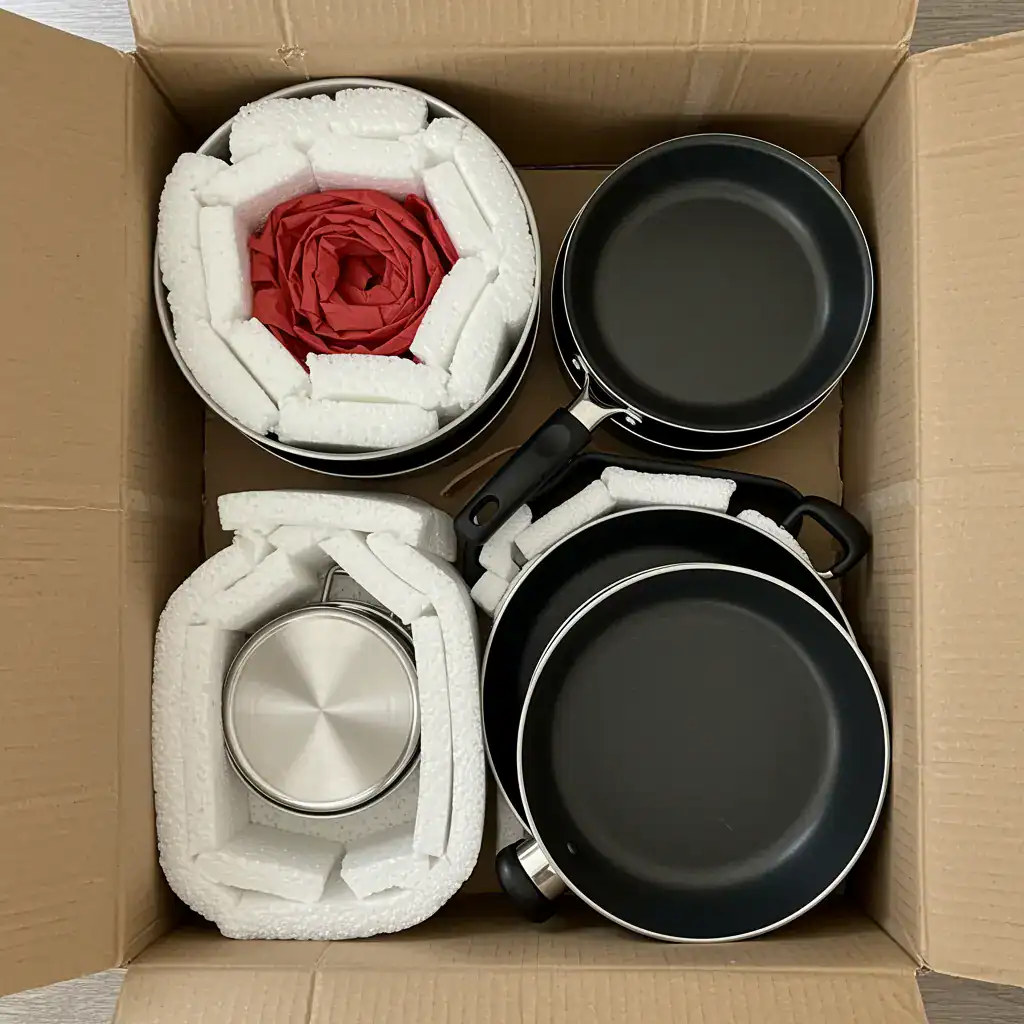
- Prepare the box. Line the bottom of each box with several layers of crumpled packing paper or a folded towel. This cushioning protects the cookware from bumps as the box is carried or transported.
- Nest similar pieces together. Place a layer of padding between each nested pot or pan. For example, you can nest three saucepans of different sizes by placing a foam sheet or folded dish towel between each one.
- Wrap handles and knobs. Handles, knobs, and side grips can crack or bend if they take a direct hit. Wrap these protruding parts with extra packing paper or bubble wrap to create a buffer zone.
- Fill empty spaces. After placing the cookware in the box, fill gaps with lightweight items such as dishtowels, pot holders, or additional crumpled paper. A firmly packed box is less likely to shift, reducing the chance of damage.
- Seal and label. Close the box securely with packing tape, then label it with the contents, the room, and any special handling instructions such as “heavy” or “this side up.”
How to Pack Lids and Glass Covers Safely
Lids and glass covers require extra care, especially if they are made of tempered glass or have vented steam holes that can crack under pressure.
- Wrap each lid individually. Place the lid in the center of a sheet of packing paper, fold the corners over the top, and tape the paper securely.
- Use bubble wrap for glass. For glass lids, add a layer of bubble wrap over the packing paper, paying special attention to the edges and handles.
- Pack lids vertically. Standing lids on their edges, similar to how you would store plates, distributes pressure more evenly and reduces the chance of breakage.
- Label the lid box clearly. Mark the box as “fragile – glass lids” so anyone handling it understands it needs gentle treatment.
Common Mistakes to Avoid When Packing Cookware
Even careful movers sometimes make small errors that lead to damaged cookware. Avoid these common mistakes to keep your pots and pans in great condition:
- Packing too much weight into a single box, causing the bottom to bow or tear.
- Leaving sharp edges, such as the rim of cast iron pans, unwrapped and exposed.
- Using newspapers instead of clean packing paper on light-colored or porous cookware, which can lead to ink transfer.
- Forgetting to protect the interior of non-stick pans and assuming exterior wrapping is enough.
- Failing to label heavy boxes, which increases the risk that someone will lift them incorrectly and drop them.
Unpacking Your Cookware in Your New Kitchen
Once you arrive at your new home, resist the urge to rush through unpacking. Open cookware boxes on a cleared countertop or table so nothing falls to the floor. As you unwrap each piece, inspect it for damage and dry it again if any condensation has formed inside the wrapping. This is also a good moment to reorganize your collection, placing the pots and pans you use most often in the most accessible cabinets or drawers.
If you labeled your boxes clearly, you will be able to locate essential items like your everyday skillet or saucepan quickly, allowing you to cook simple meals without digging through every box. Taking a few extra minutes to arrange your cookware logically will save you time and frustration in the weeks that follow.
Final Thoughts
Learning how to pack pots and pans for moving without damage is less about complicated techniques and more about patience, proper materials, and thoughtful organization. By cushioning delicate surfaces, avoiding unnecessary weight in each box, and treating non-stick and glass pieces with extra care, you can arrive at your new home with cookware that looks and performs just as well as it did in your old kitchen. With a bit of planning, your first meal in your new space can be enjoyable, stress-free, and cooked in pans that survived the move perfectly.