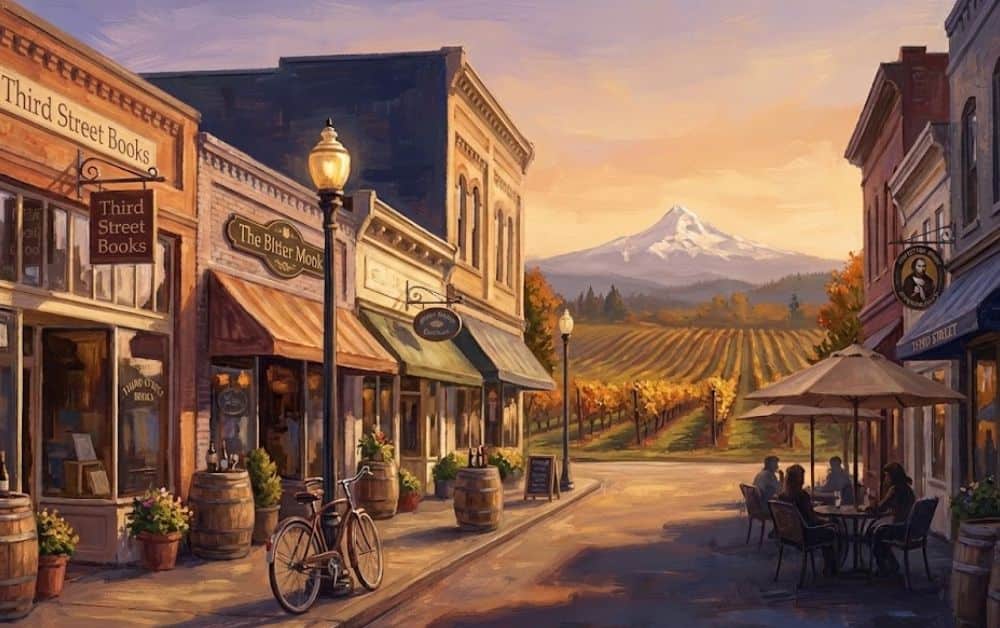
If you’re considering a move to Oregon’s wine country, McMinnville deserves serious attention. This city of about 35,000 people sits in the heart of Yamhill County, roughly 50 miles southwest of Portland. The question isn’t whether McMinnville is pleasant (it is), but whether it fits your specific priorities for small-town living.
The Wine Country Appeal
McMinnville earned its nickname as the Heart of Oregon Wine Country for good reason. The surrounding Willamette Valley produces world-class Pinot Noir, and the annual International Pinot Noir Celebration draws enthusiasts from around the globe. If wine culture matters to you, you’ll find over 220 wineries and vineyards within easy reach.
Downtown McMinnville lives up to its reputation as “Oregon’s Favorite Main Street.” Third Street features locally owned boutiques, coffee shops, and restaurants that create genuine community gathering spaces. Unlike many small towns that have hollowed out, McMinnville’s downtown remains economically vibrant.
The city also hosts quirky cultural events that reflect Pacific Northwest sensibilities. The UFO Festival every May celebrates a famous 1950 sighting, while the Santa Parade and various wine events fill the calendar year-round.
Cost of Living Reality Check
Housing in McMinnville runs higher than many expect for a town this size. The median home value sits around $471,500, with downtown properties ranging from $400,000 well into seven figures. Single-family homes average closer to $640,000 in desirable neighborhoods.
The overall cost of living comes in about 18% higher than the national average but 5% lower than Oregon’s state average. That puts McMinnville in an interesting middle ground: more expensive than truly rural Oregon, but more affordable than Portland or Eugene.
Property taxes in Yamhill County add to ownership costs, though Oregon’s lack of sales tax provides some offset. Budget-conscious buyers often need household incomes between $80,000 and $120,000 to comfortably afford homeownership here.
Rent offers a more accessible entry point. One-bedroom apartments typically run $881 to $1,200 monthly, depending on location and amenities.
Safety and Crime Statistics
McMinnville posts crime rates roughly 20% lower than Oregon’s state average. The city experiences about 13% less violent crime than the state and 21.6% less property crime.
Specific numbers paint a clearer picture. McMinnville records 298 violent crimes per 100,000 residents, compared to Oregon’s state rate of 342. Property crime sits at 2,300 per 100,000 versus the state’s 2,935.
Recent trends show improvement. Crime decreased by 2% overall in recent years, with non-violent crimes dropping 5% and arson-related incidents falling 30%. The 38-officer McMinnville Police Department maintains visible community engagement.
Residents consistently report feeling safe walking in most neighborhoods after dark. The city lacks the high-crime pockets that plague larger urban areas.
Transportation and Getting Around
McMinnville earns mixed marks for mobility. The city boasts an impressive walk score of 94, making downtown and central neighborhoods highly walkable. The bike score of 70 indicates decent cycling infrastructure.
However, the transit score sits at just 30. Yamhill County Transit provides public bus service on Routes 1 through 4, with both English and Spanish options. But service frequency remains limited compared to urban areas. Most residents ultimately need personal vehicles for daily errands and commuting.
This car dependence becomes more pronounced if you work in Portland or Salem. McMinnville sits about 50 miles from Portland (roughly an hour drive) and 30 miles from Salem. Daily commuting to either city tests patience and fuel budgets.
Employment and Economic Base
McMinnville’s economy centers on three main pillars: wine and hospitality, education (Linfield University), and healthcare. The city maintains an unemployment rate around 3.8%, below both state and national averages.
Wine industry jobs span vineyards, wineries, tasting rooms, restaurants, and related tourism businesses. These positions offer steady work but often at modest wages outside management roles.
Linfield University provides stable academic employment and attracts students who support the local service economy. Healthcare jobs at Willamette Valley Medical Center and related facilities offer better compensation but require specific credentials.
The broader job market skews toward service industries. Tech workers, engineers, or specialized professionals often need to commute to Portland or work remotely. The small-town setting simply doesn’t support the job diversity of larger metros.
Schools and Education
McMinnville School District serves the area with generally above-average performance. The district graduation rate hits 79%, which trails Oregon’s 80% state average but exceeds many rural districts.
Parents consistently praise the tight-knit community feel in schools and strong extracurricular activities. Class sizes remain manageable, and teacher turnover stays low.
Linfield University adds cultural richness to the city. The campus hosts concerts, lectures, sporting events, and theater productions that benefit the broader community. Retirees particularly appreciate access to these intellectual and cultural offerings.
Climate and Weather Patterns
McMinnville experiences typical Willamette Valley weather. Expect about 43 inches of annual rainfall, with most precipitation falling between October and May. Summers from July through September tend to be warm, dry, and sunny.
Winter temperatures rarely drop below freezing. Summer highs peak in the mid-80s. Snow occurs occasionally but seldom accumulates significantly or persists long.
The gray, drizzly winters test some residents. If you suffer from seasonal affective disorder, the extended cloudy periods from November through March require coping strategies. On the flip side, summers offer near-perfect conditions without the brutal heat found in much of the country.
Outdoor Recreation Access
McMinnville’s location provides reasonable access to diverse landscapes. The Oregon Coast sits about 50 miles west (roughly an hour’s drive). Popular coastal destinations like Lincoln City and Newport make easy day trips.
Mount Hood and the Cascade Range lie about 90 minutes east, offering skiing, hiking, and mountain recreation. The Columbia River Gorge with its waterfalls and trails is similarly accessible.
Local options include numerous parks, the Willamette River for fishing and water activities, and extensive vineyard country for scenic drives and cycling. However, McMinnville itself lacks the immediate mountain or beach access that defines some Oregon communities.
Community Character and Culture
McMinnville cultivates a strong sense of community that attracts many residents. The small-town atmosphere means you’ll recognize faces at the grocery store and strike up conversations with strangers downtown.
However, diversity remains limited. The city’s population runs about 75% white, with Hispanic residents making up most of the remaining quarter. Black, Asian, and other populations remain quite small. If cultural diversity matters to you, this homogeneity may feel constraining.
The political climate leans conservative compared to Portland, though not as firmly red as rural Eastern Oregon. Yamhill County splits fairly evenly in statewide elections.
Residents describe the pace as relaxed without being boring. There’s enough happening to stay engaged, but you won’t find the constant bustle of metropolitan life. This suits people seeking refuge from urban chaos but may underwhelm those who thrive on endless entertainment options.
Healthcare Access
Willamette Valley Medical Center serves as McMinnville’s primary hospital, providing emergency services, general surgery, and standard medical care. For specialized treatment or complex medical needs, patients typically travel to Portland.
The area supports several primary care practices, dentists, and outpatient services adequate for routine healthcare. Medical infrastructure meets the needs of a healthy population but lacks the specialist depth of larger cities.
For retirees with significant health concerns or chronic conditions requiring specialist oversight, the limited medical infrastructure warrants careful consideration.
The Verdict: Who Thrives in McMinnville
McMinnville works exceptionally well for specific types of people. Wine enthusiasts who want daily immersion in wine culture will find few better options. Empty nesters seeking small-town charm with cultural amenities land in a sweet spot.
Families who value strong community ties and above-average schools while accepting limited diversity do well here. Remote workers who can earn Portland-level salaries while enjoying lower housing costs than the metro area gain significant lifestyle advantages.
The city struggles to accommodate others. Young singles looking for dynamic nightlife and diverse social scenes will feel constrained. Career professionals in specialized fields face long commutes or limited advancement opportunities. Families on tight budgets will strain against housing costs that remain high relative to local wages.
McMinnville offers the platonic ideal of small Pacific Northwest town living: walkable downtown, nearby nature, strong community bonds, and genuine local character. Whether that appeals depends entirely on what trade-offs you’re willing to accept for authentic small-town life wrapped in wine country beauty.
The rain, limited diversity, and car dependence for anything beyond downtown come with the territory. If you can embrace these limitations while appreciating the city’s considerable charms, McMinnville delivers a high quality of life that many residents wouldn’t trade for anything.