Storage is one of the most frequently added and most frequently unnecessary expenses in a residential move. The decision to rent a unit is often made reactively — in response to a moving date that does not align cleanly with a lease start, a renovation that is not yet finished, or a general sense that there is too much stuff to move at once. In some of these situations, storage is the correct solution. In others, it adds a monthly cost and a second loading event — because everything that goes into a storage unit must eventually be loaded again — without solving the underlying problem. The correct approach is to evaluate the specific circumstance against a clear set of criteria rather than defaulting to storage as a buffer for logistical uncertainty.
The Five Situations Where Storage Is the Correct Answer
A lease or closing date gap is the most straightforward case for temporary storage. When the move-out date at the current address precedes the move-in date at the new address by more than a few days, and the gap cannot be bridged through a lease overlap arrangement, a storage unit provides a secure intermediate location for belongings while the transition is in progress. In the Portland rental market, where competitive lease conditions frequently produce misaligned dates, one to four-week gaps between leases are common. A 10×10 or 10×15 unit covers most one to two-bedroom households during this window at a monthly cost of approximately $100 to $200 depending on the facility and access type.
A delayed home closing is a distinct but related scenario. Escrow extensions, appraisal disputes, title issues, and financing contingencies can push a closing date by days or weeks after the seller has already vacated. In this situation, the seller’s belongings need a location that is not the property under contract. Moving company vaulted storage — in which the crew loads the household directly into storage vaults at a secured facility operated by the moving company — eliminates the double-handling problem because the same crew that loads the origin also delivers to the destination once the closing completes. This is structurally more efficient than self-storage in this scenario because it avoids a separate storage move-in day.
Renovation staging is the third legitimate use case. When a new home requires flooring replacement, full interior repainting, kitchen or bathroom remodeling, or any work that generates dust, debris, or moisture before move-in, introducing furniture and household goods before that work is complete creates a higher probability of damage than storing them off-site for the duration of the renovation. The cost calculation here compares storage rental plus any additional labor against the repair or replacement cost of items damaged during active construction — and for any household with hardwood furniture, electronics, or upholstered pieces, the storage option is almost always the less expensive outcome.
Home staging for sale is a case where storage actually generates return rather than representing a cost. Professionally staged homes sell faster and at higher prices than unstaged or cluttered ones, and the primary tool of effective staging is selective furniture removal. A storage unit that holds excess furniture, bulky seasonal items, and personal decorative objects during a listing period creates the visual spaciousness that makes rooms photograph and show better to buyers — a function that is directly connected to sale price and time on market.
Downsizing — moving from a larger home to a smaller one where not all existing furniture and possessions will fit in the new space — benefits from temporary storage when the decisions about what to keep, donate, or sell have not been made before the move date. Forcing those decisions under moving-day time pressure produces poor outcomes: high-value items are given away or discarded because there is no time for deliberation, and items that should have been sold are donated because the sale window has closed. Storage creates the time to make those decisions correctly.
When Storage Adds Cost Without Solving the Problem
The double-handling cost is the most underweighted factor in storage decisions. Every item that enters a storage unit must be moved twice: from the origin into the unit, and from the unit to the final destination. Each of those events requires labor time, packing material, and in most cases a truck. For a two-bedroom household, a storage move-in day followed three weeks later by a storage move-out day can add $600 to $1,200 in moving labor to the total project cost, on top of the storage rental itself. When the gap between move-out and move-in is less than five to seven days, the cost of a short-term hotel or furnished rental for the people involved, combined with leaving belongings with a trusted contact or negotiating a brief overlap on the leases, is frequently less expensive than the combined cost of storage rental plus double-handling labor.
Storage is also not the correct solution for excess volume that simply reflects a failure to declutter. A storage unit does not eliminate belongings — it defers the decision about them while charging a monthly fee for the deferral. Households that move into storage everything that does not immediately fit in the new space often maintain that unit for months or years, paying cumulative rental fees that exceed the resale value of the stored items by a wide margin.
Climate Control: Which Items Require It and Why
The distinction between standard and climate-controlled storage has specific material consequences for certain categories of items. A climate-controlled unit maintains an interior temperature between approximately 55 and 80 degrees Fahrenheit and regulates relative humidity within a range that prevents condensation and moisture accumulation. The Pacific Northwest’s ambient humidity — Portland averages 75 to 85 percent relative humidity in winter months — makes climate control relevant even for short-term storage of sensitive materials.
Wood furniture is hygroscopic: it absorbs and releases moisture from the surrounding air, expanding and contracting with humidity changes. Sustained exposure to high humidity in a standard unit causes joint separation, veneer lifting, warping in solid wood panels, and mold growth in upholstered components. Antique furniture, solid wood dining tables, and wood-framed sofas require climate-controlled storage in Pacific Northwest conditions for any period exceeding two to three weeks.
Electronics and storage media — hard drives, film negatives, vinyl records, printed photographs — are damaged by condensation events that occur when temperature differentials cause moisture to form on cold surfaces. A standard unit that heats during the day and cools at night cycles through this condensation range repeatedly, which is exactly the failure mode that destroys optical drives and degrades magnetic storage media over time.
Musical instruments — particularly stringed instruments with spruce or cedar soundboards, brass instruments with lacquer finishes, and pianos — require stable temperature and humidity to maintain structural integrity and playability. A piano stored in a standard unit for two months during a move will almost certainly require tuning and may sustain permanent soundboard damage if ambient humidity fluctuates significantly.
Items that do not require climate control: metal tools, outdoor furniture made from synthetic materials, plastic storage bins, seasonal decorations in sealed containers, and most clothing packed in sealed boxes for periods under four weeks.
Storage Types: Self-Storage, Portable Containers, and Vaulted Moving Storage
Traditional self-storage facilities offer units in a range of sizes with either drive-up exterior access or interior corridor access. Drive-up units are significantly more convenient for loading and unloading large furniture because items can be moved directly from a truck into the unit without navigating interior hallways. Interior units on upper floors require elevator access for anything heavy, which adds time to every access event. Confirm drive-up availability and operating hours before booking — not all facilities offer 24-hour access, and a facility that closes at 6 PM creates access constraints on moving day if the timeline runs long.
Portable container storage — in which a steel or wood container is delivered to the origin address, loaded at the resident’s pace, and then transported to either a storage facility or the destination address — eliminates one loading event when the container moves directly to the new home. It is most cost-effective for moves where the storage period is short and the destination is within the same metro area. For longer-duration storage, the monthly container rental cost typically exceeds the cost of a comparable self-storage unit.
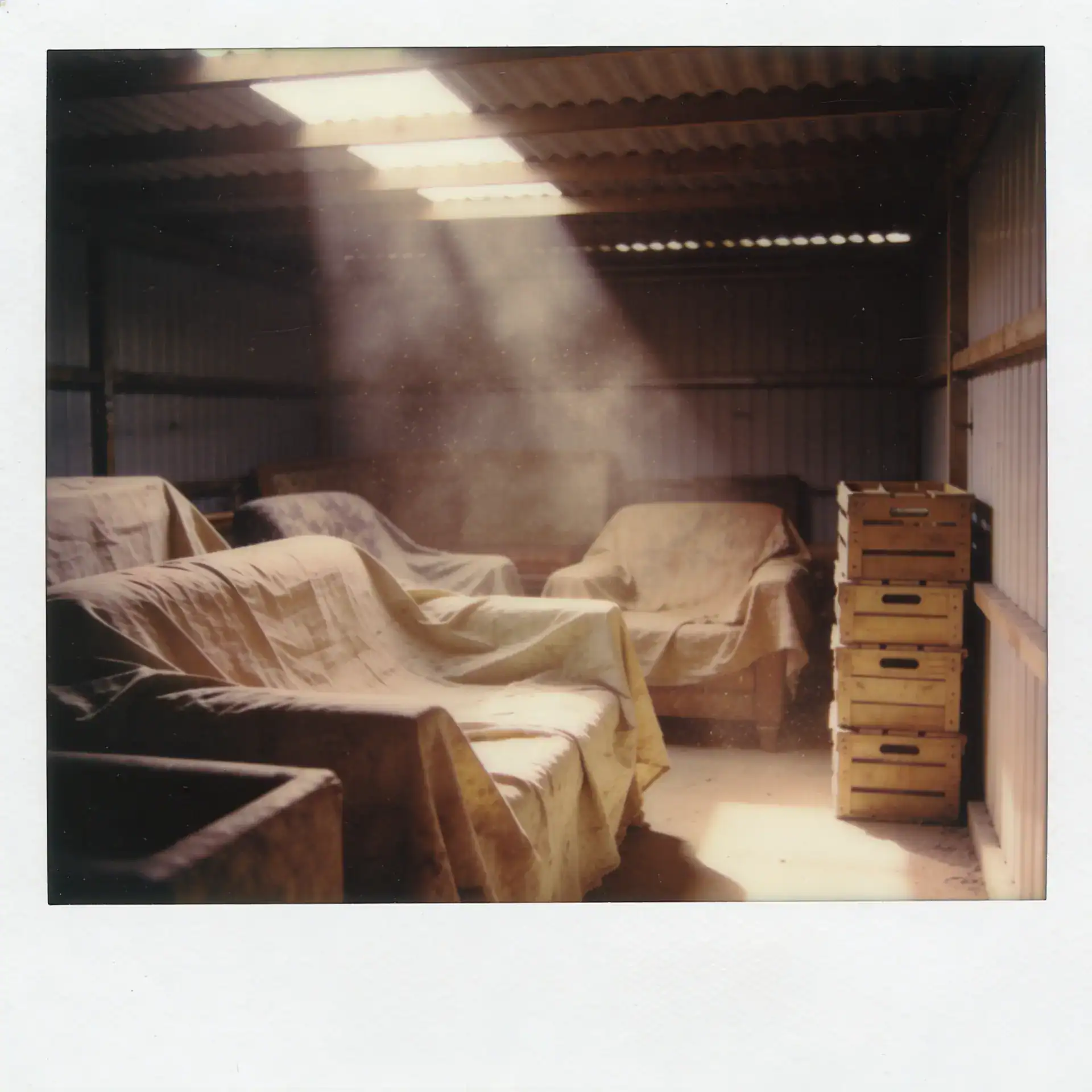
Vaulted storage through a moving company involves the crew loading belongings directly into wooden storage vaults at a climate-controlled warehouse, where the vaults are tagged and held until delivery is scheduled. This option has the highest per-month cost of the three but the lowest total labor cost for situations involving a delayed closing or extended renovation, because it requires only one loading event and one delivery event with the same crew.
Unit Size Selection
The correct unit size for a standard household is determined by total cubic footage of belongings rather than by bedroom count alone, but bedroom count provides a reliable starting estimate. A studio or one-bedroom apartment typically requires a 5×10 or 10×10 unit. A two-bedroom home requires a 10×10 to 10×15. A three-bedroom home requires a 10×15 to 10×20. A four-bedroom home or larger requires a 10×20 to 10×30. These estimates assume vertical stacking to ceiling height — a unit that is only filled to half height wastes approximately half its rental cost. Load the unit with the largest, heaviest items against the back wall and stack systematically toward the access door, leaving a narrow center aisle for retrieval access.
What Should Never Go Into Storage
Perishable food, living plants, and animals cannot be stored in a self-storage unit under any circumstances — most facility rental agreements prohibit them explicitly. Hazardous materials including propane cylinders, gasoline, paint, ammunition, and compressed gas canisters present fire and liability risks and are prohibited by virtually all storage operators. High-value irreplaceable items — original identity documents, family heirlooms with no replacement equivalent, irreplaceable photographs — should never be stored in a unit where access depends on a facility’s security and operating hours. Medications required for ongoing health management should travel with the individual, not enter a storage unit.
If you are deciding whether storage makes sense as part of your upcoming move and want to understand what a coordinated residential moving and storage solution looks like for your specific situation, Redefyne Moving & Storage provides both services under one roof — so your belongings are handled by the same team from origin to storage to final delivery.
For local moves in the Portland and West Linn area with a storage component, coordinating the move and the storage through a single provider eliminates the scheduling complexity of managing two separate companies. Get in touch for a free quote today.