Southeast Portland is one of the most beloved and livable corners of the city. It’s where you’ll find tree-lined streets, independent coffee shops on every block, some of Portland’s best restaurants, and a neighborhood culture that feels genuinely rooted and real. For people moving to Portland for the first time — or Portlanders relocating within the city — Southeast is consistently one of the most sought-after destinations.
But Southeast Portland is also a large, diverse area with significant differences from one neighborhood to the next. Knowing what to expect before you arrive helps you choose the right pocket of Southeast for your lifestyle, budget, and priorities.
This guide covers everything you need to know about moving to Southeast Portland — the neighborhoods, the costs, the culture, the trade-offs, and the practical details of getting there. When you’re ready to make the move, our Portland movers know Southeast inside and out and can make your move-in day seamless.
What Is Southeast Portland?
Southeast Portland — locals just call it “SE” — is the quadrant of the city east of the Willamette River and south of Burnside Street. It’s a large area that encompasses dozens of distinct neighborhoods, each with its own personality and price point.
Some of the most well-known Southeast neighborhoods include:
- Hawthorne — eclectic, walkable, and one of Portland’s most iconic commercial corridors
- Division Street — one of the best restaurant streets in the entire Pacific Northwest
- Belmont — charming, residential, and beautifully walkable
- Ladd’s Addition — a historic neighborhood with a unique rose garden and diagonal street grid
- Sellwood-Moreland — a quieter, more suburban feel with antique shops and river access
- Woodstock — a tight-knit neighborhood with a strong local identity
- Richmond — one of SE’s most desirable residential neighborhoods
- Mount Tabor — centered around the only extinct volcanic cinder cone within city limits in the U.S.
- Buckman — close-in, gritty, and increasingly popular with young professionals
- Sunnyside — dense, walkable, and centrally located within SE
Understanding which neighborhood within Southeast suits you is the first step to a successful move.
The Culture and Vibe of Southeast Portland
Southeast Portland has a character that’s distinct from other parts of the city. It’s the part of Portland that most closely matches the city’s creative, independent, progressive reputation.
Here’s what defines SE culture:
Independent everything. Chain businesses are rare in SE. Coffee shops, restaurants, bars, bookstores, and boutiques are almost exclusively locally owned. Powell’s Books — arguably Portland’s most famous institution — is technically in Burnside but anchors the cultural identity of the broader SE area.
Walkability and bikeability. Southeast Portland consistently ranks among the most bikeable urban areas in the country. Flat streets, dedicated bike lanes, and a network of low-traffic “bike boulevards” make cycling a genuinely practical way to get around. Many SE residents commute entirely by bike.
Food culture. Division Street, Hawthorne Boulevard, and Belmont Street are home to some of Portland’s best dining. From James Beard Award-winning restaurants to beloved neighborhood breakfast spots, SE Portland punches well above its weight when it comes to food.
Community feel. Despite being a dense urban area, Southeast Portland has a strong neighborhood identity. Farmers markets, community gardens, block parties, and local events give SE a small-town feel within a major city.
Progressive values. SE Portland leans heavily progressive in its politics and culture. LGBTQ+ friendly spaces, sustainability-focused businesses, and community activism are all prominent features of the neighborhood landscape.
Neighborhoods in Southeast Portland: A Closer Look
Hawthorne
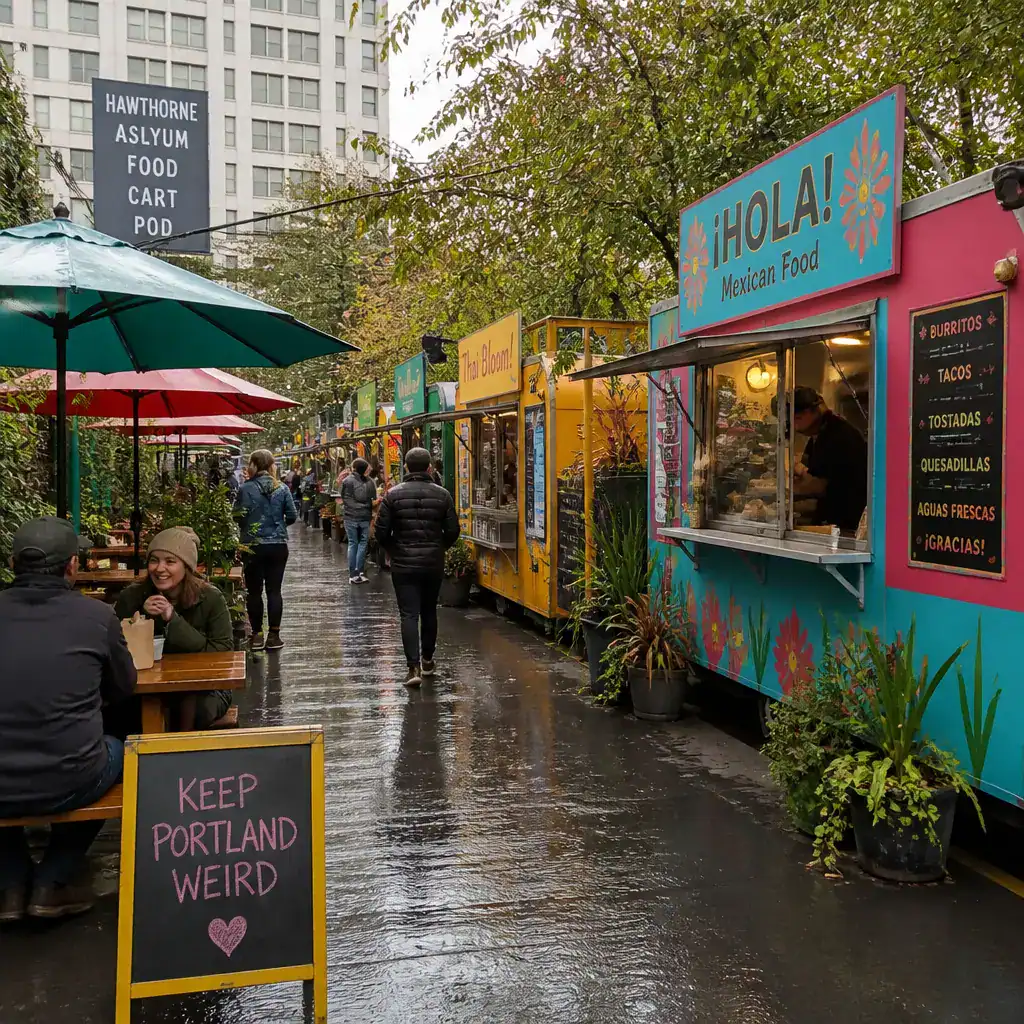
Hawthorne Boulevard is one of Portland’s most famous streets — a mile-long stretch of vintage clothing stores, record shops, cafes, restaurants, and bars running through the heart of SE. The residential streets around Hawthorne are quiet, tree-lined, and beautiful. It’s one of the most walkable neighborhoods in the city.
Best for: Young professionals, artists, people who want to walk everywhere Vibe: Eclectic, bohemian, lively Price: Mid-range to higher — its popularity drives demand
Division Street
Once a quieter corridor, Division Street has transformed into one of Portland’s premier dining and bar destinations. The residential neighborhoods around Division are dense and popular, particularly the stretch between 20th and 50th Avenue.
Best for: Food lovers, young professionals, people who want nightlife walkability Vibe: Trendy, vibrant, rapidly evolving Price: Among the higher end in SE
Sellwood-Moreland
At the southern end of Southeast, Sellwood feels like a small town within the city. It borders the Willamette River, has a charming antique district, and offers a quieter, more relaxed pace than the busier parts of SE. Oaks Bottom Wildlife Refuge and Sellwood Riverfront Park make it a nature lover’s neighborhood.
Best for: Families, people who want a quieter pace, outdoor enthusiasts Vibe: Quiet, charming, suburban-adjacent Price: Moderate — slightly more affordable than inner SE
Richmond
Richmond is one of Southeast’s most consistently desirable residential neighborhoods. It’s centrally located between Hawthorne and Division, with easy access to both corridors and a strong residential identity. Beautiful Craftsman and Victorian homes line its streets.
Best for: Families, professionals, anyone wanting a classic Portland neighborhood feel Vibe: Residential, established, beautiful Price: Higher — Richmond is in high demand
Mount Tabor
Built around the slopes of an extinct volcano-turned-park, Mount Tabor is one of Portland’s most unique neighborhoods. The park itself — with its reservoirs, forested trails, and city views — is one of the best urban parks in the country. The surrounding residential streets are quiet and tree-heavy.
Best for: Outdoor enthusiasts, families, people who value green space Vibe: Peaceful, scenic, community-oriented Price: Moderate to higher
Woodstock
Woodstock has a strong neighborhood identity centered around Woodstock Boulevard, a low-key commercial strip with excellent local restaurants, coffee shops, and a beloved farmers market. It’s a bit further from downtown than inner SE neighborhoods but offers more space for the price.
Best for: Families, people seeking community feel and value Vibe: Neighborhood-y, unpretentious, authentic Price: More affordable than inner SE
Buckman
Buckman is one of the closest-in neighborhoods in SE, just across the Morrison Bridge from downtown. It’s gritty and urban, with a mix of older apartments, converted warehouses, and newer development. It’s popular with young professionals who want proximity to downtown without paying Pearl District prices.
Best for: Young professionals, people who commute downtown Vibe: Urban, eclectic, up-and-coming Price: Moderate
Cost of Living in Southeast Portland
Southeast Portland is not cheap — but it’s generally more affordable than the Pearl District, NW Portland, and parts of the west side. Here’s a rough breakdown of what to expect:
Rent
- Studio apartments: $1,100–$1,500/month
- 1-bedroom apartments: $1,400–$1,900/month
- 2-bedroom apartments: $1,800–$2,600/month
- 3-bedroom houses: $2,500–$3,500+/month
Prices vary significantly by neighborhood. Inner SE (Hawthorne, Division, Richmond, Buckman) commands a premium. Outer SE (Woodstock, Sellwood, Foster-Powell) tends to be more affordable.
Buying
The median home price in Southeast Portland neighborhoods ranges from around $450,000 in more affordable pockets to well over $700,000 in premium areas like Richmond and Ladd’s Addition. Craftsman bungalows — the quintessential SE Portland home style — are particularly sought after and priced accordingly.
Day-to-Day Costs
Portland has no sales tax, which makes everyday purchases meaningfully cheaper than in most major U.S. cities. Oregon does have income tax, which is worth factoring into your overall budget if you’re relocating from a no-income-tax state.
Getting Around Southeast Portland
By Bike
Southeast Portland is exceptionally bikeable. The city’s network of bike boulevards — low-traffic residential streets with signage and infrastructure designed for cyclists — makes it possible to navigate most of SE comfortably on two wheels. Many SE residents commute to downtown by bike year-round.
By Public Transit
TriMet serves Southeast Portland with bus lines running along the major corridors (Hawthorne, Division, Belmont, Powell) and the MAX light rail running along the eastern edge of SE at Gateway. The bus network is reliable for inner SE but thins out in the outer neighborhoods.
By Car
Southeast Portland is navigable by car, but parking can be competitive in the denser inner neighborhoods, particularly around Hawthorne and Division. Many streets in inner SE have permit parking zones. If you’re moving to SE from a car-dependent area, be prepared to potentially walk or bike for shorter trips.
On Foot
Inner Southeast — particularly the area between Hawthorne and Division from roughly 20th to 50th Avenue — is highly walkable. Walk Score ratings in these neighborhoods frequently exceed 85. Outer SE neighborhoods are more car-dependent.
What to Know Before You Move to Southeast Portland
Rain Is Real
Portland’s reputation for rain is well-earned. Southeast Portland gets roughly 36 inches of rain per year, most of it falling between October and April. The rain isn’t typically heavy — it’s more of a persistent grey drizzle — but it’s consistent. Invest in good rain gear, waterproof cycling gear if you plan to bike, and embrace it. Portlanders don’t let the rain stop them.
Summers Are Spectacular
The flip side of Portland’s rainy reputation is its summers, which are genuinely extraordinary. June through September brings warm, dry, sunny days with low humidity. Summers in SE Portland — with the neighborhood’s parks, patios, farmers markets, and outdoor festivals — are some of the best urban summer experiences in the country.
The Food Scene Is World-Class
If you care about food, Southeast Portland will not disappoint. Division Street alone has more acclaimed restaurants per block than most entire cities. From breakfast institutions like Tasty n Daughters to destination dinner spots, SE Portland’s food scene is a legitimate reason to choose this part of the city.
Parking Your Moving Truck
If you’re moving into an apartment or house in inner SE, plan ahead for the moving truck. Many inner SE streets require parking permits, and a large moving truck will need a reserved space. Portland’s Bureau of Transportation issues moving permits for street parking — apply at least a week in advance. Our apartment movers are familiar with SE Portland’s parking logistics and can help coordinate this as part of your move.
It’s Very Dog-Friendly
Southeast Portland is an extremely dog-friendly area. Off-leash areas, dog-friendly patios, and a general culture of welcoming dogs in public spaces make SE a great choice for pet owners.
Is Southeast Portland Right for You?
Southeast Portland is the right fit if you:
- Value walkability and bikeability over car convenience
- Want access to independent restaurants, coffee shops, and bars
- Are looking for a neighborhood with strong community identity
- Appreciate older home styles — Craftsman bungalows, Victorians, and mid-century architecture
- Want to be close to outdoor spaces — parks, the river, Mount Tabor
- Are comfortable with the rain trade-off for spectacular summers
It may not be the right fit if you:
- Need easy highway access for a long car commute
- Prefer newer construction or modern apartment buildings
- Want a quieter, more suburban environment (though Sellwood comes close)
- Are on a very tight budget — more affordable options exist in outer East Portland
Making Your Move to Southeast Portland
Moving to a new neighborhood in a new city is one of the most exciting — and most logistically complex — things you can do. Southeast Portland’s dense streets, older housing stock, and parking constraints mean that having an experienced local moving team makes a real difference.
Our moving services cover all of Southeast Portland, from Buckman and Hawthorne to Sellwood and Woodstock. We know the neighborhoods, the parking logistics, and the building quirks that come with SE’s older homes and apartments.
Whether you’re moving to SE Portland from across town or across the country, get in touch with our Portland movers today. We’ll make sure your first day in Southeast Portland starts exactly the way it should — with your belongings safely in place and the rest of the city ready to explore.