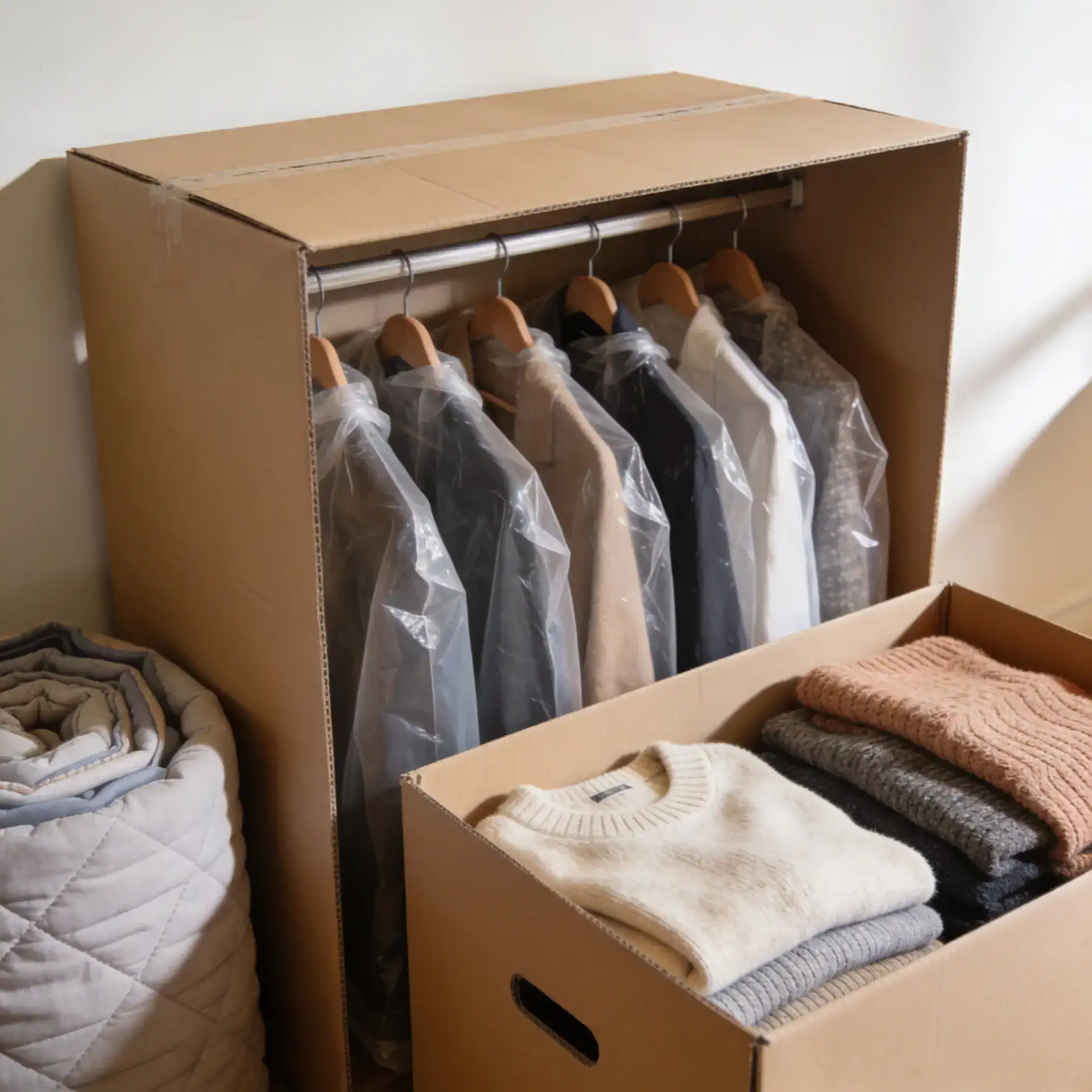
Clothing is the most consistently mismanaged category in residential packing. It is bulky, varied in fabric composition, and easy to deprioritize until the final hours before a move — which is exactly when poor decisions get made. The result is a wardrobe that arrives creased, compressed, and disorganized, requiring hours of ironing and sorting that should not have been necessary.
Packing clothes well is not complicated, but it requires matching the packing method to the garment type, choosing the right container for each category, and sequencing the process so that what you need first is the last thing loaded.
Fabric Composition Determines Packing Method — Not Preference
The single most important variable in clothing packing is fabric structure. Garments with structural support — blazers, wool trousers, dress shirts, suit jackets — wrinkle because fabric tension cannot redistribute across a hard fold line. Soft, unstructured fabrics like cotton jersey, polyester blends, and activewear tolerate compression and rolling without retaining crease damage.
This distinction drives every container and method decision that follows.
Structured garments should never be folded flat into a box. The pressure from stacking and the vibration during transit lock fold lines into the fabric. These garments belong in a wardrobe box, hung on the internal crossbar, with no more than 24 items per box to prevent shoulder and collar distortion from lateral pressure.
Unstructured garments — t-shirts, leggings, casual pants, underwear, socks, pajamas — are the correct candidates for rolling. The ranger roll, used by military personnel for compression packing, involves folding the bottom hem inside out to create a securing cuff, folding in the sides, rolling from the opposite end, and flipping the cuff over the completed roll. This method eliminates loose edges, prevents unrolling in transit, and compresses volume by roughly 30 percent compared to flat folding.
Knitwear — wool sweaters, cashmere, heavyweight cotton — should be flat folded, not rolled. Rolling knits applies directional tension that stretches the fabric and distorts the garment shape. Fold along natural seam lines, stack heaviest knits at the bottom of a medium box, and avoid overpacking to preserve the fold.
Wardrobe Boxes: When They Are Worth It and When They Are Not
A wardrobe box is a tall, double-walled corrugated carton with a metal hanging bar across the top. It is designed for one specific function: transporting garments that must remain hanging to avoid wrinkle damage. Suits, blazers, formal dresses, hanging blouses, and dry-cleaned items fall into this category.
One wardrobe box typically holds between 15 and 24 hanging garments depending on fabric weight and spacing. For a 2-bedroom home with a standard wardrobe, two to three wardrobe boxes is a reasonable starting point.
The cost and space trade-off matters. Wardrobe boxes are among the most expensive packing materials per unit and occupy significant truck volume relative to their clothing capacity. Using them for casual t-shirts or jeans because they are convenient is an inefficient use of both money and truck space. Reserve wardrobe boxes specifically for garments that cannot be folded without permanent damage.
For hanging items on shorter local moves, the trash bag method is a legitimate alternative. Group 8 to 10 garments on hangers, pull a large heavy-duty bag up from the bottom over the clothes, and tie the drawstring loosely around the hanger hooks. This protects against dust and minor abrasion, keeps garments together by category, and takes seconds to execute.
Vacuum Compression Bags: Correct Applications and Common Errors
Vacuum-sealed compression bags reduce the volume of bulky, low-structure items like down coats, puffy jackets, comforters, and thick winter sweaters by 50 to 70 percent. For out-of-season clothing being moved in summer, or for households with large amounts of bulky outerwear, compression bags are a legitimate space-saving tool.
The critical error is applying compression to structured garments. Suits, blazers, dress pants, and anything with interfacing or padding will take on permanent compression creases that cannot be steamed out at home. Compression also applies sustained pressure to buttons, zippers, and embellishments, which can cause fabric stress damage over the duration of a move.
Delicate Fabrics Require Isolation, Not Just Gentle Handling
Silk, chiffon, lace, and beaded garments require acid-free tissue paper wrapped around each item before packing. These fabrics transfer color under sustained pressure, snag on neighboring garments, and absorb moisture from surrounding materials. Packing them loose in a wardrobe box alongside heavier items exposes them to abrasion from hangers, shoulder seams, and zipper edges.
Garment bags inside a wardrobe box — a bag within a box — offer the most complete protection for high-value or irreplaceable pieces.
The Essentials Bag and the Dresser Drawer Shortcut
Pack a separate bag — a suitcase or large tote — with three to five days of immediately needed clothing: everyday outfits, sleepwear, undergarments. This bag travels in the vehicle, not the moving truck. It eliminates the first-night scramble through labeled boxes to find something to wear.
For dressers with lightweight drawer contents — socks, t-shirts, casual items — leaving clothing inside the drawers and wrapping the entire dresser in stretch wrap is the fastest and most efficient packing method available. It eliminates a packing step entirely. Remove heavy items to keep the dresser manageable, and confirm with your moving crew that the dresser will be transported upright.
Sequence, Labeling, and the Box Weight Rule
Clothing boxes become dangerously heavy when overpacked. A medium box — roughly 18 by 14 by 12 inches — filled with denim can exceed 50 pounds, which creates injury risk during loading and increases the chance of box failure. Pack clothing in medium boxes, not large ones, and stop when the box becomes difficult to lift with both hands.
Label each box with the room destination, clothing category, and season. Labeling by season matters specifically because the first priority after a move is accessing current-season clothing — not the full wardrobe.
If you are managing a full home relocation with multiple bedrooms and closets, having a professional crew handle the wardrobe packing alongside heavy furniture and specialty items significantly reduces the risk of wardrobe damage and packing inefficiency.
For those moving within the Portland metro area, Redefyne Moving & Storage provides wardrobe boxes, packing materials, and full-service packing options — so your wardrobe arrives in the same condition it left. Reach out for a free quote and let us handle the details.