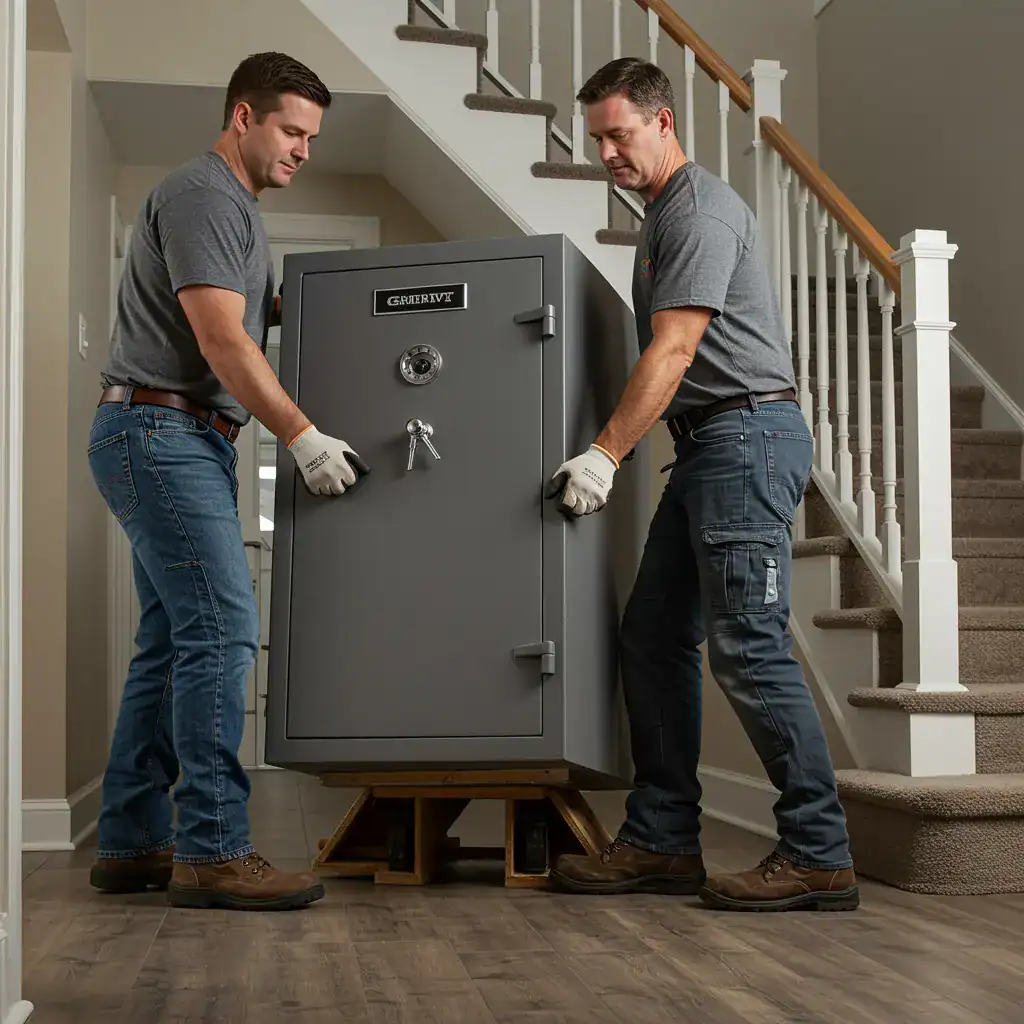
Gun safes are among the heaviest and most awkward objects you will ever need to move. Whether you are relocating to a new home, rearranging your space, or transferring your safe to a more secure location, the process demands serious planning, the right equipment, and a clear understanding of the risks involved. A standard gun safe can weigh anywhere from 200 to over 1,000 pounds, and its compact, dense design makes it notoriously difficult to grip, balance, and maneuver through doorways, hallways, and staircases. Without the proper approach, you risk serious injury to yourself and your helpers, as well as costly damage to your floors, walls, and the safe itself.
This guide walks you through every step of moving a gun safe safely and efficiently. From preparation and equipment selection to techniques for navigating stairs and tight spaces, you will find everything you need to get the job done right. We also cover the legal and safety considerations for transporting firearms, common mistakes to avoid, and when it makes more sense to call in professional gun safe movers rather than attempt the move on your own.
Why Moving a Gun Safe Is Different from Moving Other Heavy Items
Most heavy furniture, such as sofas, bookshelves, or refrigerators, distributes its weight across a larger surface area and often has handles, edges, or removable parts that make lifting easier. Gun safes are different. Their weight is concentrated into a rigid steel box with few natural grip points. The combination of extreme density, a high center of gravity, and a smooth exterior makes them prone to tipping, especially on ramps or stairs.
Beyond the physical challenge, gun safes often contain firearms, ammunition, and other valuables that must be handled with care during the move. Proper preparation and the right moving strategy are not optional when you are dealing with an object this heavy and this sensitive.
Step 1: Prepare the Safe Before You Move It
Preparation is the foundation of any successful gun safe move. Skipping these steps can turn a manageable task into a dangerous one.
Empty the Safe Completely
Before anything else, remove all firearms, ammunition, documents, and valuables from the safe. This reduces the overall weight, which matters enormously when you are dealing with an object that may already weigh several hundred pounds. More importantly, moving a loaded safe creates serious safety hazards. Firearms can shift during transport, and even secured weapons should not be in a moving safe. Store all firearms safely and legally during the move, following all applicable state and local laws regarding firearm transport and storage.
Remove Interior Shelves and Accessories
Most gun safes have removable shelving, door organizers, and other interior components. Take these out before the move. Loose items inside the safe will shift during transport, potentially damaging the interior finish or creating imbalance. Removing these components also reduces weight and gives you a cleaner, more manageable object to move.
Secure the Door
Lock the safe or use heavy-duty straps to keep the door firmly closed during the move. A swinging safe door adds unpredictable weight distribution and creates a serious pinch and crush hazard for anyone handling the safe. If you are using straps to secure the door, make sure they do not interfere with your grip points or the placement of the dolly.
Measure Doorways, Hallways, and Stairwells
Measure the safe’s dimensions and compare them with every doorway, hallway, and staircase along your planned route. You need at least a few inches of clearance on each side to maneuver safely. Identify any turns, thresholds, or tight corners that could create problems, and plan how you will handle them before you start moving.
Step 2: Gather the Right Equipment
Attempting to move a heavy gun safe without proper equipment is unsafe and can easily result in damage or injury. The right tools make the job not only easier but far safer for everyone involved.
At a minimum, you should have a heavy-duty appliance dolly or a professional-grade safe dolly rated to support the full weight of your safe. These dollies typically include straps and larger wheels designed to roll over thresholds and minor obstacles. Standard hand trucks or lightweight dollies are not suitable for this task and may fail under load.
In addition to a dolly, gather high-quality moving straps or lifting straps, thick moving blankets, and sheets of plywood or Masonite to protect floors. Work gloves with good grip, closed-toe shoes, and preferably steel-toe boots should be worn by everyone assisting with the move. If you anticipate going up or down stairs, consider using stair-climbing dollies or additional spotters to help control the safe.
Step 3: Protect Your Home and Floors
Before you begin moving the safe, protect the areas it will pass through. Place moving blankets over door frames, railings, and tight corners to prevent dents, chips, and scratches. On hardwood, tile, or vinyl floors, lay down sheets of plywood, Masonite, or thick cardboard to distribute the safe’s weight and avoid gouging or cracking the surface.
Clear the path of rugs, cords, small furniture, and any clutter that could cause tripping or interfere with the dolly’s wheels. Ensure pets and children are kept completely away from the work area. A clean, unobstructed path dramatically reduces the chances of accidents and makes it easier to maintain control of the safe at all times.
Step 4: Load the Safe onto the Dolly
Loading the safe onto the dolly is one of the most critical parts of the process. Begin by positioning the dolly next to the safe on a stable, level surface. If possible, have at least three adults assist: two to stabilize and one to operate the dolly. Tilt the safe slightly by leveraging it from the side or using a pry bar with a protective block under the edge, taking care not to damage the floor.
Once the safe is tilted just enough, slide the dolly’s base plate underneath. Keep your hands and feet clear of pinch points. When the safe is fully on the dolly, secure it tightly using the integrated straps or additional ratchet straps. Double-check that the safe is centered and balanced on the dolly before you attempt to move it.
Step 5: Move the Safe on Level Ground
On flat, level surfaces, move slowly and deliberately. Keep the dolly tilted just enough to roll, but not so far back that the safe feels unstable. One person should steer from behind the dolly, while one or two spotters walk alongside or in front, watching for obstacles and helping guide the movement.
Communicate clearly throughout the process. Use simple, consistent commands such as “stop,” “slow,” “left,” and “right.” Avoid sudden turns or abrupt stops, which can cause the safe to shift on the dolly or become unbalanced. If at any point the safe feels unstable, stop immediately and reassess your approach before continuing.
Step 6: Navigating Ramps, Thresholds, and Stairs
Ramps, thresholds, and stairs are the most dangerous parts of moving a gun safe. Whenever possible, choose a route that avoids stairs entirely, even if it is longer. If you must navigate a step or small threshold, use sturdy boards or a ramp to create a gradual incline and have spotters hold the safe steady while it rolls over the edge.
Moving a safe up or down stairs should only be attempted with the right equipment and an experienced team. A motorized stair-climbing dolly or a professional safe-moving crew is strongly recommended. If you attempt this yourself, ensure multiple strong helpers are positioned both above and below the safe, with everyone aware of their role. Never stand directly in the path of the safe, and always have an escape route if control is lost.
Step 7: Loading the Safe into a Vehicle
If you are transporting the safe to another location, you will need to load it into a truck or trailer. Use a loading ramp rated for the weight of the safe and dolly combined. Position the ramp at a gentle angle and ensure it is securely attached to the vehicle before moving the safe onto it.
Push the safe up the ramp slowly, with one person guiding from behind the dolly and at least one person stabilizing from each side. Once inside the vehicle, position the safe against a wall or in a corner to minimize movement during transit. Use heavy-duty ratchet straps to secure the safe to anchor points, tightening the straps until the safe cannot shift forward, backward, or side to side.
Step 8: Unloading and Positioning the Safe
When you arrive at the new location, reverse the loading process with the same level of care. Unstrap the safe only when you are ready to move it down the ramp, and make sure the ramp is properly secured. Move slowly down the ramp, keeping the safe under control at all times.
Once inside, guide the safe along your preplanned path to its final position. Before setting it down, confirm that the floor can support the safe’s weight and that the location allows the door to open fully without obstruction. After the safe is in place, carefully remove the dolly and let the safe rest flat on the floor. Reinstall interior shelves and accessories only after you are certain the safe is stable and the door operates correctly.
Step 9: Safety and Legal Considerations for Firearms
Throughout the moving process, you must handle firearms and ammunition in a manner that complies with all applicable federal, state, and local laws. In many jurisdictions, firearms must be unloaded and transported in locked cases, separate from ammunition. Some areas require specific permits or impose restrictions on how and where firearms may be transported.
Consult your local laws in advance, and if you are crossing state lines, review regulations for each state on your route. Always treat every firearm as if it is loaded, keep muzzles pointed in a safe direction, and never allow unauthorized individuals access to firearms or ammunition during the move.
Common Mistakes to Avoid
Several common errors can quickly turn a gun safe move into an emergency. Avoid underestimating the safe’s weight or overestimating your physical capabilities. Never attempt to move a heavy safe alone, and do not rely on makeshift tools such as lightweight dollies, office chairs, or unbraced plywood ramps.
Do not skip the step of emptying the safe, and never move a safe with loaded firearms inside. Failing to secure the door, rushing through tight spaces, or neglecting to protect your floors are other frequent mistakes. Taking the time to plan, prepare, and communicate will prevent most of these problems before they occur.
When to Hire Professional Gun Safe Movers
In many cases, the safest and most cost-effective option is to hire professional gun safe movers. Professionals have specialized equipment, training, and experience to handle extremely heavy safes, navigate difficult staircases, and move safes through tight or multi-level spaces. They are also insured, which offers protection in the event of accidental damage.
Consider hiring professionals if your safe is especially large or heavy, if it must be moved up or down multiple flights of stairs, or if you have limited help available. While there is an upfront cost, the reduced risk of injury and property damage often makes this a wise investment.
Final Checks After the Move
After the safe is in its new location, perform a few final checks. Open and close the door several times to ensure it operates smoothly and that the hinges and locking mechanism were not damaged during the move. Inspect the exterior and interior for dents, scratches, or misalignment.
Once you are satisfied that the safe is functioning correctly, return your firearms, ammunition, and valuables, following your usual organization system. Verify that any dehumidifiers, lighting kits, or electronic locks are properly connected and working. Finally, review your home security measures to make sure the safe’s new placement still supports your overall security plan.
Conclusion
Moving a gun safe is a serious undertaking that requires planning, the right equipment, and careful execution. By preparing the safe properly, protecting your home, using appropriate tools, and working with a coordinated team, you can relocate even a very heavy safe with minimal risk. Always respect the weight you are dealing with, follow all firearm safety and legal requirements, and do not hesitate to call in professionals when the move is beyond your comfort level. A cautious, methodical approach will help ensure that both your safe and everyone involved in the move remain secure from start to finish.