Sorting Before Packing
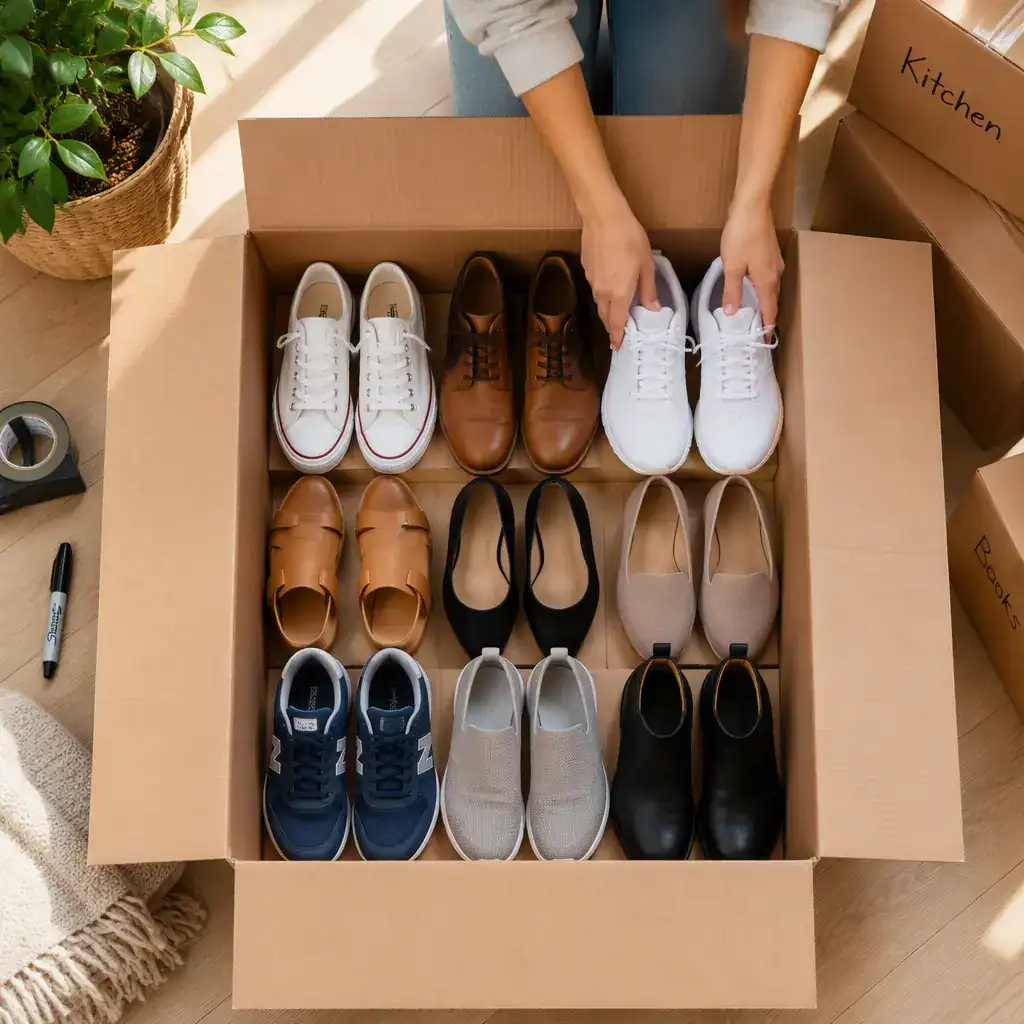
Sort shoes into three categories before packing: everyday pairs that need to be accessible immediately after the move, seasonal or occasional pairs that can be packed further in advance, and delicate or high-value pairs, including leather dress shoes, suede, and heels, that need individual protection rather than being packed in bulk with the rest of the collection.
How to Pack Everyday and Seasonal Shoes
- Stuff each shoe with crumpled packing paper to help it hold its shape during transit.
- Keep pairs together with a rubber band or twist tie around the heels so they don’t separate and get mismatched during unpacking.
- Pack heavier shoes, like boots, at the bottom of the box and lighter shoes toward the top to avoid crushing.
- Use the shoes’ original boxes where available, since they’re sized correctly and stack well, and label each box with its contents.
- If original boxes aren’t available, a medium moving box works well. Avoid overpacking, since a box that’s too heavy is harder to carry and more likely to be dropped.
How to Pack Delicate and High-Value Shoes
Wrap leather and suede shoes individually in packing paper rather than plastic, since plastic traps moisture against the material and can cause mildew or discoloration over even a short move. Insert shoe trees or additional stuffed paper into boots and dress shoes to help them keep their shape, and pack delicate pairs in a single layer rather than stacking other shoes or heavy items on top. Heels benefit from a small piece of cardboard or paper wrapped around the heel itself to prevent it from bending or snapping against another shoe in the same box.
Moisture and the Pacific Northwest’s Rainy Season
A move during Portland’s rainy season adds a real risk that doesn’t come up in a dry-climate move: shoes and boxes sitting in a truck or on a loading dock during rain can pick up moisture even when the shoes themselves were packed dry. Lining shoe boxes with a layer of packing paper and avoiding sealed plastic bags gives any incidental moisture somewhere to go rather than trapping it against leather or suede, where it can encourage mold within a day or two. A move scheduled for Portland’s wetter months benefits from the same shoe-packing approach as any move, with slightly more attention to keeping boxes off wet pavement and covered during loading and unloading.
What to Avoid
- Packing shoes loose in a box without stuffing, which allows them to lose shape during a multi-hour or multi-day move.
- Sealing leather or suede shoes in plastic bags, which traps moisture and can lead to mildew.
- Stacking heavy boots or shoes directly on top of delicate pairs like heels or dress shoes.
- Packing shoes in a dresser drawer left in place, which adds significant weight and risks damaging both the shoes and the dresser during the move.
Unpacking Shoes at the New Home
Unpack shoes as soon as reasonably possible after the move rather than leaving them boxed for an extended period, particularly leather and suede pairs, since prolonged storage in a sealed box increases the same moisture and mildew risk that applies during transit. Removing any stuffed paper and letting shoes air out briefly before placing them back in a closet or shoe rack helps confirm nothing was affected by the move before they’re put back into regular rotation.
Frequently Asked Questions
Can I pack shoes in plastic bags for a move?
It’s better to avoid plastic bags for leather and suede shoes, since they trap moisture and can lead to mildew. Packing paper offers similar protection without sealing in humidity.
Should shoes go in the same box as clothing?
Shoes are best packed separately from clothing. Their weight and rigid shape can crush folded clothing, and shoes pack more efficiently and stay in better shape in their own dedicated boxes.
How do I keep shoe pairs from getting separated during a move?
A rubber band or twist tie looped around the heels of each pair keeps them together through packing, transport, and unpacking.
Does moving during Portland’s rainy season affect how I should pack shoes?
Yes, mainly around moisture exposure during loading and unloading. Avoiding sealed plastic packaging and keeping boxes covered and off wet pavement reduces the added mildew risk that comes with a wet-season move.