Moving to a new home is one of the most exciting transitions you can make, but it also comes with a long list of tasks that demand careful attention. Among the most overlooked steps in the moving process is figuring out how to pack cleaning supplies for moving. While it might seem simple enough to toss your bottles of bleach, drain cleaner, and glass spray into a cardboard box, doing so without proper precautions can lead to spills, chemical reactions, and even serious safety hazards. Whether you are relocating across town or making a longer move to or from Portland, Oregon, taking the time to pack your cleaning products correctly will save you a major headache on moving day.
Portland, Oregon, is a city known for its environmentally conscious residents and its strong sense of community care. Many Portland households use a wide variety of cleaning products, from conventional bleach-based cleaners to eco-friendly, plant-derived alternatives. Regardless of what types of products fill your cleaning cabinet, the fundamentals of packing them safely remain the same. This guide walks you through everything you need to know, step by step, so your move goes smoothly and without incident.
Why Packing Cleaning Supplies Requires Special Attention
Cleaning products are not like books or clothing. Many of them contain chemicals that are corrosive, flammable, or toxic when inhaled. When bottles are improperly sealed, stacked carelessly, or exposed to heat during transit, they can leak, break, or react with other chemicals nearby. A spill inside a moving truck is not just an inconvenience; it can damage your furniture, ruin boxes of clothing or documents, and create a health risk for anyone who comes into contact with the fumes or liquid.
Beyond the practical safety concerns, there are also regulations to consider. Professional moving companies often have strict policies about what they will and will not transport. Hazardous materials, including many common household cleaners, may be prohibited from moving trucks entirely. If you are working with a moving company in Portland, Oregon, it is worth checking their policies well in advance so you are not caught off guard on moving day.
Sort and Inventory Your Cleaning Supplies Before Packing
The first step in the process is to take stock of every cleaning product you own. Go through your kitchen cabinets, bathroom shelves, laundry room, and garage. Pull everything out and lay it on a flat surface so you can see what you are working with.
As you sort through your supplies, ask yourself a few important questions. Is this product almost empty? Is the expiration date still valid? Will I realistically use this in the new home? If a product is nearly empty or expired, this is the perfect time to dispose of it responsibly rather than packing it. Reducing the number of items you move means fewer risks and less weight to carry.
For residents in Portland, Oregon, the city offers excellent resources for disposing of hazardous household chemicals. Portland has designated drop-off sites where residents can safely dispose of products like paint thinners, pesticides, and strong chemical cleaners. Taking advantage of these resources before your move is both a smart and responsible choice.
Understand Which Products Are Considered Hazardous
Before you start filling boxes, you need to understand which cleaning products fall into the hazardous category. Common household cleaners that require special handling include bleach, ammonia-based cleaners, drain uncloggers, oven cleaners, rust removers, and products containing strong acids or bases. Aerosol sprays also require extra care because the pressurized cans can rupture if they get too hot or are punctured.
One critical rule to keep in mind is that bleach and ammonia should never be stored or transported together. When these two substances mix, they produce toxic chloramine gas, which is dangerous to breathe. Even if the bottles are sealed, storing them side by side in a box with limited airflow is not a risk worth taking. Always keep incompatible chemicals separated during packing and transport.
This is especially relevant when discussing tips for packing cleaning supplies for a move in Portland, OR, where many households also keep natural or organic cleaning solutions alongside conventional products. Even natural cleaners like concentrated vinegar or hydrogen peroxide should be handled with care, as they can still irritate skin, damage certain surfaces, or leak and cause unwanted reactions when combined with other substances.
Prepare Your Supplies and Packing Materials
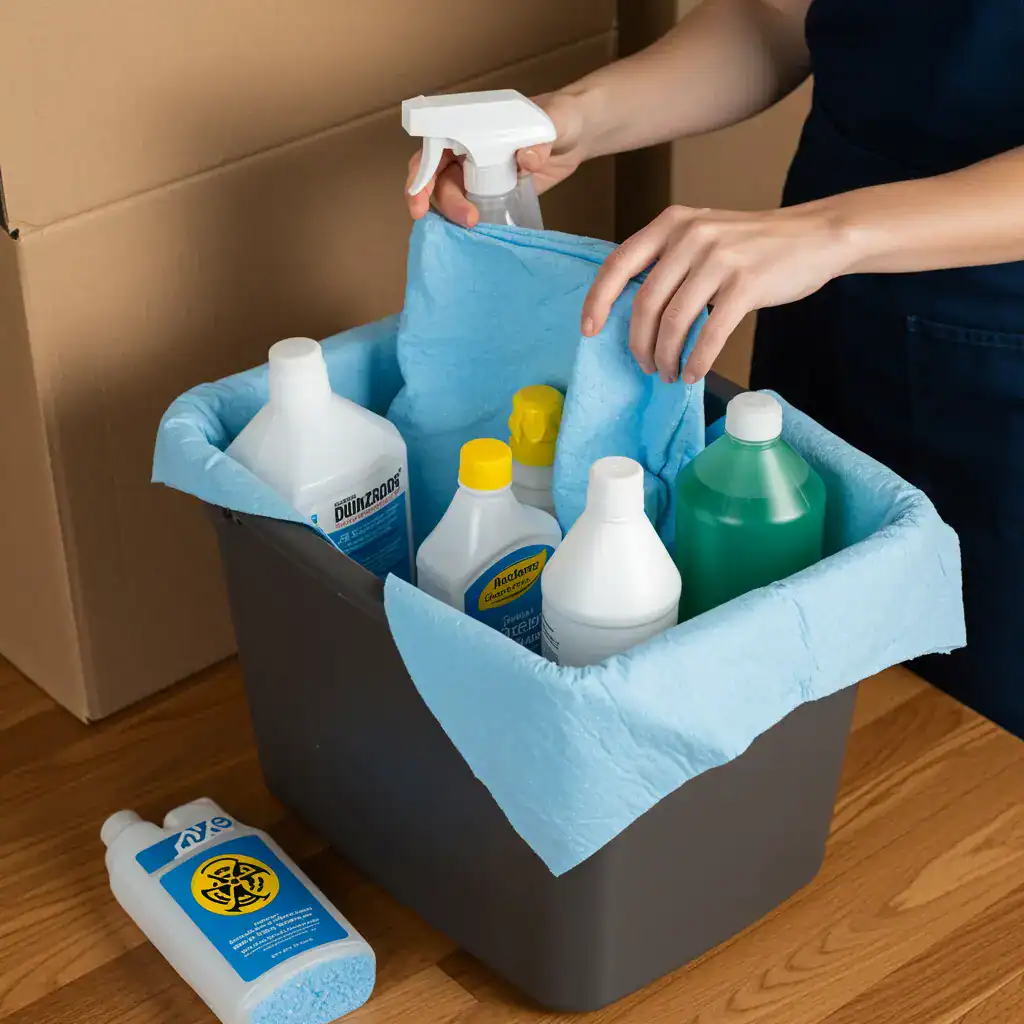
Once you have sorted through what you will keep, gather the materials you need to pack everything safely. Sturdy, leak-resistant boxes are essential, and plastic storage bins with secure lids can be particularly useful for transporting liquids. You will also want plenty of packing tape, permanent markers, sealable plastic bags, and absorbent materials such as newspaper, paper towels, or rags.
Before placing any bottle in a box, check the cap to ensure it is tightly closed. For extra protection, wrap a small piece of plastic wrap over the opening before screwing the cap back on. Then, place each bottle in a sealable plastic bag. This way, if a leak does occur, it will be contained inside the bag rather than spreading throughout the box.
How to Pack Different Types of Cleaning Products
Different cleaning supplies require slightly different packing techniques. For liquid cleaners in plastic bottles, use the double-seal method: tighten the cap, wrap the opening with plastic, and place the bottle in a sealed bag. Position the bottles upright in the box and fill empty spaces with crumpled paper or towels to prevent shifting.
For glass containers, such as specialty cleaners or concentrated solutions, add an extra layer of cushioning. Wrap each glass bottle in bubble wrap or several layers of newspaper, then place it in a plastic bag before boxing. Clearly mark the box as “FRAGILE” so anyone handling it knows to take extra care.
Aerosol cans, including disinfectant sprays, furniture polish, and air fresheners, should be kept away from direct heat. Do not pack them near heaters, in attics, or in vehicles that may experience extreme temperatures. Pack aerosols upright, surrounded by soft materials to prevent dents or punctures.
Label Boxes Clearly and Keep Essentials Accessible
Clear labeling is one of the simplest yet most effective ways to keep your move safe and organized. On each box containing cleaning products, write “CLEANING SUPPLIES” and “THIS SIDE UP,” along with notes such as “HAZARDOUS,” “FRAGILE,” or “DO NOT STACK” where appropriate. If you are moving with the help of professionals, let them know which boxes contain chemicals so they can load and handle them accordingly.
It is also wise to create a small “essentials” cleaning kit that you keep with you rather than in the moving truck. This kit might include all-purpose cleaner, dish soap, a few microfiber cloths, rubber gloves, and trash bags. Having these items on hand when you arrive at your new home allows you to clean surfaces immediately without rummaging through packed boxes.
Know What Not to Pack on the Moving Truck
Many moving companies, including those serving Portland, OR, will not transport certain hazardous items for safety and liability reasons. These often include gasoline, propane, fireworks, and some types of strong cleaning chemicals or solvents. Before moving day, review your mover’s list of prohibited items and plan accordingly.
If a product is not allowed on the truck, you have a few options. You can safely dispose of it at a local hazardous-waste facility, give it to a neighbor who can use it, or, in rare cases, transport small quantities yourself if it is legally and safely permitted to do so. Never attempt to hide restricted items in regular boxes, as this can endanger everyone involved in the move.
Unpacking Cleaning Supplies Safely in Your New Home
When you arrive at your new home, prioritize unloading and checking your cleaning supplies. Inspect each box for signs of leaks or damage before bringing it inside. Open boxes in a well-ventilated area, such as a garage or porch, and keep children and pets away until you are sure everything is intact.
As you place items into cabinets or storage areas, group similar products together and keep incompatible chemicals apart. Store bleach, ammonia, acids, and bases on separate shelves when possible, and avoid placing heavy items high above eye level, where they could fall. This is also a good moment to review and adjust your cleaning habits, perhaps swapping out older, harsher chemicals for safer or more environmentally friendly alternatives that align with Portland’s green values.
Additional Tips for an Eco-Conscious Move in Portland
If you are moving within or to Portland, you may want your move to reflect the city’s commitment to sustainability. Consider using reusable bins instead of single-use cardboard boxes for your cleaning supplies. Opt for biodegradable packing materials whenever possible, and recycle or repurpose old rags and towels for cushioning instead of purchasing new products.
You might also use your move as an opportunity to simplify your cleaning routine. Rather than transporting a large collection of specialized products, you can pare down to a few versatile, non-toxic cleaners that handle most tasks. This not only reduces what you need to pack, but also helps create a safer, healthier home environment from day one in your new space.
Final Thoughts
Learning how to pack cleaning supplies for moving safely is an investment in both your peace of mind and the protection of your belongings. By sorting through your products, understanding which items are hazardous, and using careful packing techniques, you can dramatically reduce the risk of spills, damage, and health hazards during your move.
Whether you are relocating across town in Portland, Oregon, or making a long-distance move, treating your cleaning supplies with the same care you give to valuables and fragile items will help ensure a smooth transition. With a bit of planning and attention to detail, you will arrive in your new home ready to unpack, clean, and settle in comfortably.