Learning how to pack picture frames for moving the right way can be the difference between your favorite memories arriving safely or opening a box of shattered glass. Frames, mirrors, and artwork combine fragile glass, delicate corners, and sometimes priceless sentimental value. When you add tight stairwells, rainy Oregon weather, and bumpy roads to the mix, it becomes clear that you need a careful, step-by-step packing strategy—especially if you are moving in or around Portland in 2026.
This guide walks you through everything you need to know about packing picture frames and mirrors for moving. You will learn which supplies actually protect glass, how to wrap frames with bubble wrap, how to use a picture box for moving fragile frames in Portland, and the safest way to load them into your vehicle or moving truck. Whether you are doing a full DIY move or teaming up with professional Portland movers, you will have a clear plan to keep your artwork and framed photos intact.
Essential Supplies for Packing Picture Frames and Mirrors
Before you begin, gather the right materials. Using random leftover boxes and an old blanket might seem convenient, but it leaves your glass and frames exposed. For moving fragile items safely, especially in the Pacific Northwest, you want protection from both impact and moisture.
Core Packing Materials
- Sturdy picture boxes or telescoping mirror boxes: These flat, adjustable cartons are designed specifically for frames, artwork, and mirrors. A picture box for moving fragile frames in Portland is ideal because it adds structure and crush resistance.
- Bubble wrap (small and large bubbles): Small bubbles hug the glass and frame; large bubbles add impact protection around the outside.
- Glassine paper or plain packing paper: Provides a non-abrasive first layer on glass and artwork surfaces.
- Cardboard corner protectors: Reinforce the most vulnerable points on every frame and mirror.
- Cardboard sheets or foam boards: Act as stiff armor over the glass and between items if you pack multiple frames together.
- Painters’ tape or masking tape: Used to create an X pattern on the glass to help hold shards in place if it breaks.
- Stretch wrap or plastic wrap: Helps hold layers tightly together and adds basic moisture resistance.
- High-quality packing tape: For sealing boxes and reinforcing corners and seams.
- Permanent markers and “Fragile” labels: So everyone handling the box knows it needs extra care.
Optional but Helpful Extras
- Moving blankets: Extra cushioning and protection in the truck and for very large frames or mirrors.
- Foam edge protectors: An alternative to cardboard corners that can be reused and often provide thicker cushioning.
- Silica gel packs: A good idea for long-distance moves or damp climates like Portland to help reduce moisture inside boxes.
Once you have the right supplies, you are ready to follow a detailed process for how to pack framed photos for moving, whether they are inexpensive posters or family heirlooms.
Step-by-Step: How to Pack Picture Frames for Moving
Here is a clear, repeatable method for how to pack picture frames for moving that balances speed with maximum protection.
1. Prepare a Clean, Padded Work Area
Lay out a moving blanket or thick towel on a table or clean floor. You never want to place frames directly on hard surfaces where they can get scratched or chipped while you are working.
2. Clean and Inspect Each Frame
Before wrapping, quickly check each frame:
- Make sure the back is secure and hanging hardware is removed or taped down.
- Tighten loose backing tabs so the artwork does not shift during transit.
- If the frame is cracked or already unstable, consider removing the glass and packing it separately.
3. Protect the Glass Surface
Glass is the biggest risk during a move. Use this simple but effective method to minimize damage:
- Apply painters’ tape in an X pattern: Starting at one corner of the glass, run a strip diagonally across to the opposite corner, then repeat on the other diagonal. Add one or two horizontal strips for extra stability. This helps hold glass fragments in place if the pane breaks.
- Cover with glassine or packing paper: Lay a sheet of paper over the glass and fold it tightly around the edges. This adds a soft, non-scratching layer right against the glass.
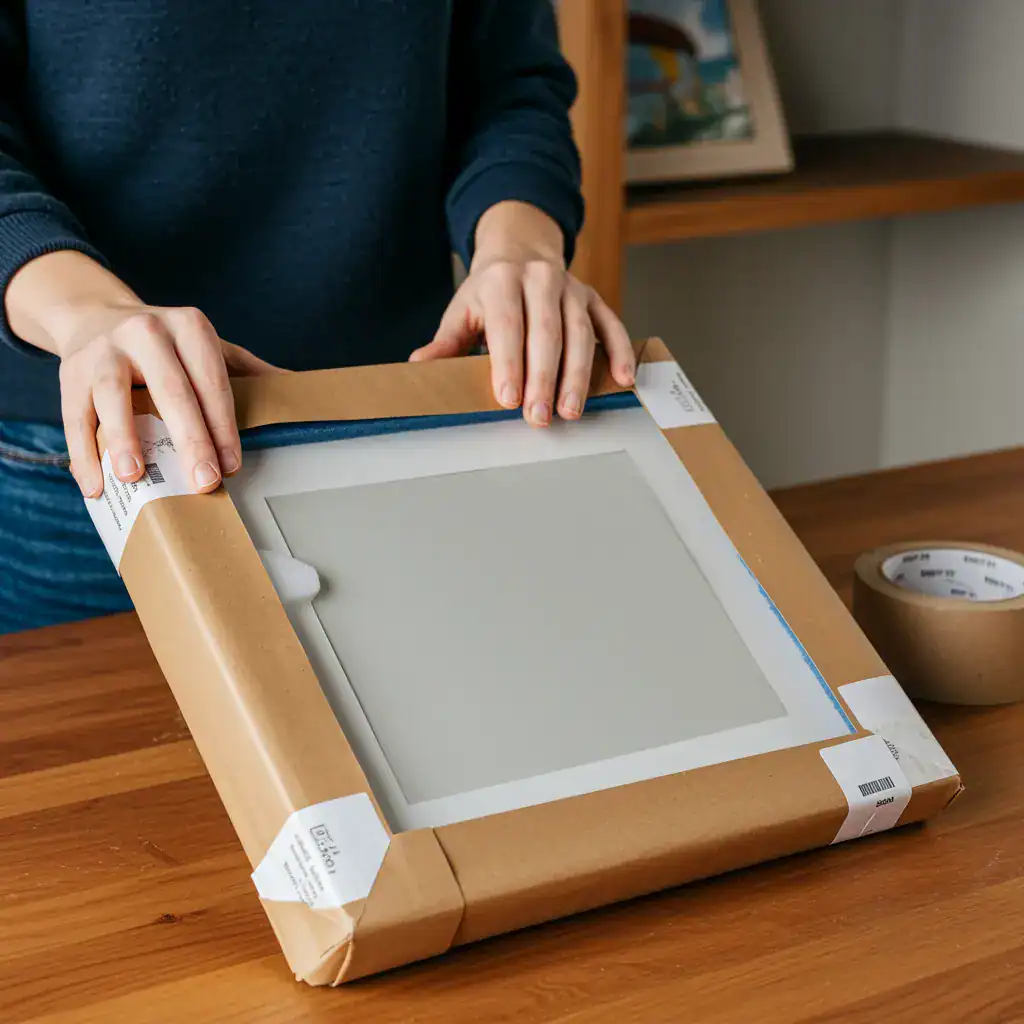
- Add a cardboard or foam board shield: Cut a piece slightly larger than the glass surface and place it on top. Tape this gently but firmly around the frame, creating a hard, protective shell.
This triple-layer approach (tape, paper, rigid board) is at the heart of moving fragile items safely.
4. How to Wrap Frames with Bubble Wrap
Next comes cushioning. Understanding how to wrap frames with bubble wrap correctly is crucial.
- Start with small-bubble wrap: Place the frame face down on a sheet of small-bubble wrap, bubbles facing outward to avoid imprinting on surfaces.
- Wrap front to back: Pull the wrap around the front, then back, so the entire frame is encased. Overlap the edges to cover all sides.
- Secure the wrap: Use tape on the back only, never directly on the frame’s finish or artwork.
- Add a second layer with large-bubble wrap for heavy or valuable pieces: This gives you an impact-absorbing bumper around the entire frame.
The end result should be a tight, padded package that does not shift or sag when you pick it up.
5. Reinforce Corners and Edges
Install cardboard or foam corner protectors on all four corners. If you do not have pre-made protectors, you can make your own by folding cardboard into snug right-angle sleeves. Corners are highly vulnerable in transit and during loading, so this step is key in packing picture frames and mirrors for moving.
6. Choose and Pack into a Picture Box
Once each frame is individually wrapped and protected, it is time to use a picture box for moving fragile frames in Portland or wherever you are headed.
- Assemble the box: Tape the bottom securely, reinforcing it with an extra strip or two of tape across the seam.
- Line the box: Add crumpled packing paper or a layer of bubble wrap along the bottom to create a padded base.
- Load frames vertically: Always place frames on edge, never flat. The vertical position distributes weight better and reduces the chance of pressure cracks.
- Separate multiple frames: If you pack more than one frame into a box, place a cardboard or foam board sheet between each wrapped frame so they cannot rub or collide.
- Fill gaps: Use crumpled paper, air pillows, or soft cloths to fill all remaining space so nothing can shift.
- Gently shake test: Close the box and gently rock it. If you feel or hear movement, open it and add more padding until everything is snug.
7. Seal, Label, and Mark Orientation
Seal the top of the box with strong packing tape, then clearly label:
- “Fragile – Glass”
- “This Side Up” with arrows
- Specific contents such as “Living Room Frames” or “Bathroom Mirror”
Good labeling ensures that you, your friends, or your professional Portland movers know these boxes need extra care from the moment they are picked up until they are set down in your new home.
How to Pack Framed Photos for Moving
Framed photos often have less monetary value than fine art but much more emotional importance. The method for how to pack framed photos for moving is similar, but there are a few special considerations.
- Watch for older or delicate photos: Vintage prints can be sensitive to moisture and pressure. Use glassine paper instead of newsprint, which can leave residue.
- Avoid stacking too many small frames together: It is tempting to pile smaller pictures in one box, but excess weight increases the risk of damage.
- Consider carrying irreplaceable photos with you: If possible, transport truly sentimental framed photos in your own car instead of the moving truck.
By adapting the same core techniques—glass protection, bubble wrap, and a well-structured box—you can confidently manage how to pack framed photos for moving without unwanted surprises on move-in day.
Packing Mirrors for Moving
Packing mirrors for moving adds another layer of risk because mirrors are generally larger, heavier, and more fragile than typical photo frames. They also have more leverage if they tip over or fall.
Special Tips for Mirrors
- Use a dedicated mirror box: For anything larger than a bathroom mirror, use an adjustable, telescoping mirror or picture box.
- Double or triple the glass protection: Use the tape X, glassine, and at least one rigid board that fully covers the mirror surface.
- Pad the frame edges: Thick foam edge protectors or multiple layers of cardboard are recommended for heavier mirrors.
- Keep mirrors upright: Pack them vertically and secure them against the side walls of the truck so they cannot tip forward.
- Never lay large mirrors flat: Horizontal placement dramatically increases the risk of breakage from pressure and flexing.
These techniques, combined with gentle handling, give you a reliable plan for packing mirrors for moving without cracks or shattered glass.
Loading Picture Frames and Mirrors into the Truck
Even if you packed everything perfectly, unsafe loading can undo all your work. To complete the process of moving fragile items safely, pay attention to how you place your boxes and loose items in the vehicle.
Best Practices for Loading
- Load frames last, unload first: Keep them accessible so they are not buried under heavy boxes.
- Place boxes against solid surfaces: Put picture and mirror boxes flush against the truck wall or between stable furniture pieces.
- Use tie-down straps: For very large mirrors or framed art, strap them to the truck wall so they cannot shift.
- Avoid high stacks: Do not stack heavy boxes on top of frame or mirror cartons. At most, place a very light box on top.
- Consider climate and weather: In Portland, rain is common. Verify that boxes are sealed and protected from direct exposure as you load and unload.
Taking a few extra minutes to secure your framed items during loading drastically reduces the chance of damage on the road.
When to Call Professional Portland Movers
Not every move has to be DIY. Some pieces—oversized mirrors, original artwork, or high-value collections—are better handled by professional Portland movers for packing art and fragile items.
Situations Where Pros Make Sense
- You own large, custom-framed art that would be difficult to replace.
- You have very heavy mirrors, such as wardrobe or gym mirrors.
- You are short on time and cannot carefully wrap each frame yourself.
- You want optional valuation coverage and documented handling by trained crews.
Experienced Portland movers who specialize in packing art for a move bring professional-grade materials, custom crating options, and practiced techniques that are difficult to replicate on a tight schedule. For many homeowners, delegating the most fragile pieces offers valuable peace of mind.
Conclusion
Protecting your artwork, memories, and mirrors begins with understanding exactly how to pack picture frames for moving the right way. From using painters’ tape and rigid boards on glass to learning how to wrap frames with bubble wrap and choosing the right picture box for moving fragile frames in Portland, every step adds a layer of security between your belongings and the unpredictable reality of moving day.
By following the methods in this guide—careful glass protection, snug wrapping, vertical packing, and smart loading—you can tackle packing picture frames and mirrors for moving with confidence. If you prefer expert help with packing art for a move or want trained Portland movers for packing art and fragile items, partnering with specialists like Portland movers ensures your frames and mirrors arrive safely, ready to be hung and enjoyed in your new home in 2026.